
How Is Plastic Recycled: Step by Step

Plastic Recycling Process
Plastic recycling is broken up into a few distinct steps. Generally these steps remain the same for most types of recycling facilities, but certain steps can be combined or omitted in some situations.
Step 1: Collection
The first step in the recycling process is always collecting the plastic material that is to be recycled.
This step is completely reliant upon businesses, restaurants, and the public to dispose of their plastic waste in the correct place. If plastic waste is disposed of in normal trash bins, it will not be recycled, so it is extremely important to separate common waste and plastic waste.
Additionally, it is ideal for governments to have a recycling collection system that goes to people’s houses or businesses to collect the plastic waste. If this is not possible, local collection points for plastic should be easy for the public to access. Making it easy and convenient for people to correctly dispose of plastic waste is paramount in promoting recycling .
Step 2: Sorting
After plastics are collected and transported to a recycling facility, the next step is sorting.
Machines sort plastics into different areas based upon a multitude of properties that are often dependent upon the recycling facility or what final product is being produced.
Plastics are usually sorted in a few common ways, such as the type of plastic (material it is made with), color of the plastic, or even how it was made. This is important because different types of plastics must be processed in different ways and some recycling facilities are only capable of recycling one type of plastic. If the wrong type of plastic is processed at the incorrect facility it can reduce the efficiency of the whole process and require the entire batch to be sent back again for resorting .
Step 3: Washing
Just like with clothes, fruits/vegetables, and many other things, plastics must be washed before they are further processed. The goal of this step is to remove impurities and everything that is not made from plastic.
Most containers and packages have labels, adhesive, or even food residue that must be removed. This non-plastic waste cannot be recycled and can cause the final product to have poor structural integrity .
Step 4: Resizing
Resizing consists of shredding or granulating the plastic waste into small particles. This increases the surface area of the plastic, making it easier to process, reshape, and transport if needed.
Additionally, it gives recycling facilities one last opportunity to remove any non-plastic waste that has made it through the first 3 steps of processing. This is often done with metal detectors or magnets that will help remove any leftover metal in the mixture .
Step 5: Identification and separation of plastics
The identification and separation of plastics is when the now small plastic particles are tested to determine their quality and class.
The first quality tested is density. This is done by floating the particles in a large tank of water. Particles less dense than water will float and more dense particles will sink.
Next their air classification is determined. Air classification is an official term for how thick or thin a particle is. This is done by dropping the particles into a small wind tunnel. The smaller pieces will fly higher up the tunnel and bigger ones will remain lower.
Two other features plastics are commonly tested for are their melting point and color. These are determined by collecting and analyzing samples from each batch of plastic particles .
Step 6: Compounding
The final step in the recycling process is often considered the most exciting because it is when the plastic particles are made into something usable for future production. Compounding is when the small particles are smashed and melted together into plastic pellets. The pellets can then be used in the production of other plastic products .
Throughout this process the plastic may be moved to different plants that specialize in different steps of the process. It can be energy intensive and the better educated we are about the process the more we can reduce the time and energy it requires
Advantages of Recycling Plastics
1.Provision of a Sustainable Source of Raw Materials
Recycling plastics provides a sustainable source of raw materials to the manufacturing industry. Once the plastics are recycled, they are sent to manufacturing industries to be redesigned and converted into new shapes and used in different appliances.
2.Reduces Environmental Problems
Since plastics are non-biodegradable, they pose a high risk to the people and the environment as a whole. They can block sewer lines, drainages and other waterways leading to blockages and unwanted pileups. When plastics are eliminated through recycling, the environment looks clean and inhabitable.
3.Encourages a Sustainable Lifestyle among People
Individuals who have ventured into plastic collection and recycling business will experience improved lifestyles as they will get their daily income from the business. This will in the long run improve the economy and boost the living standards of the people. So do not just sit there doing nothing, embrace plastic recycling activities and improve your economic standards.
Best ways to recycle plastic bottles:
Spoon Lamp

Cute Planters

Bottle Cap Decoration

Edible Plastic
Recently a company from Bali chose to address plastic pollution through better design, rather than waiting for a behavioral shift in consumers.
Think of Bali and images of pristine, palm tree-lined beaches likely come to mind. Unfortunately, the reality is different. Those beaches are no longer pristine; they’re strewn with garbage, most of it plastic that comes either from Bali’s newly commercialized way of life or from ocean currents that generously deliver foreign trash.
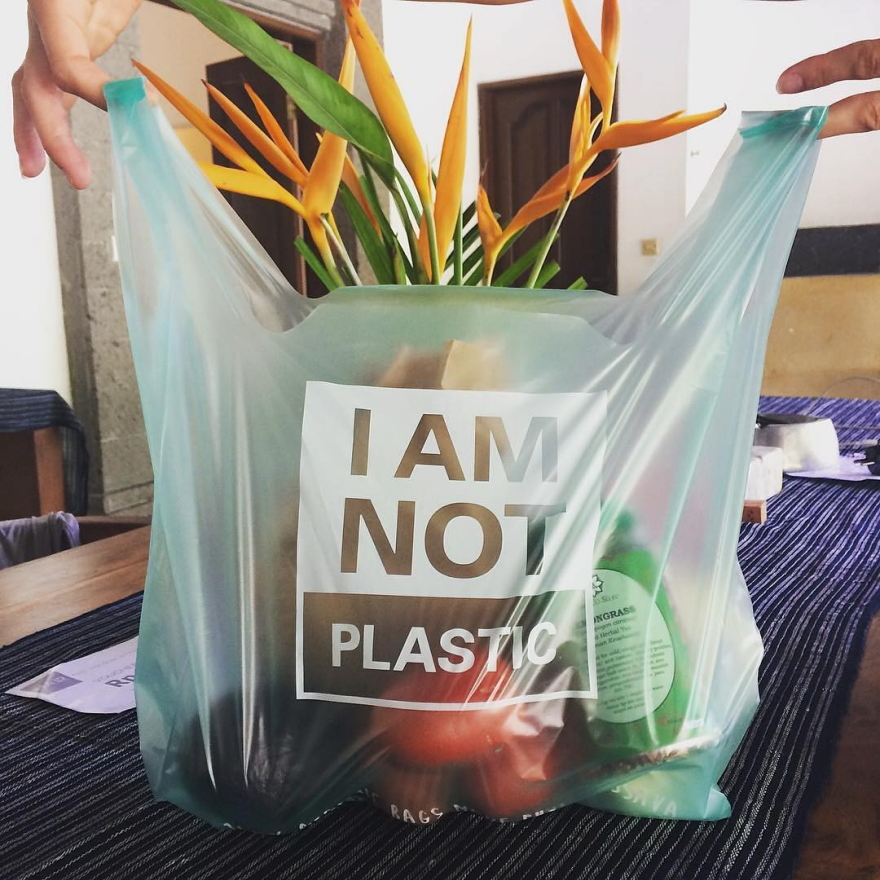
Environmentalists (myself included) talk about needing to change habits, encourage reusables, implement better recycling facilities, and figure out ways of upcycling trash, but these sorts of major lifestyle shifts take a long time. A company in Bali called Avani thinks we can’t waste any more time trying to convince people to act differently; instead, we should try to meet people where they’re at, by designing a better product that does not require a significant behavioral shift. Avani has come up with a line of fully biodegradable food products, including takeaway containers, cutlery, straws, and coffee cups, as well as grocery bags and rain ponchos; but it’s the grocery bags that most interest us since they’re one of the worst culprits when it comes to plastic pollution. More than one million plastic bags are used worldwide each minute and these require hundreds of years to break down, which really means just breaking up into minuscule pieces that will eventually be eaten by animals. In fact, an estimated one million animals die each year from eating plastic bags.

Avani’s bags are made from cassava root starch and other natural resins, using no petroleum products. They biodegrade fully within 3 to 6 months, depending on soil conditions, converting naturally into carbon dioxide and biomass, with no toxic residue. This process can be hurried by dissolving in hot water softening in cold water, and turning to leave a small amount of ash.
The bags are safe for insects and animals to eat, both terrestrial and marine, and apparently, they’re tasty, too.
Ways will help you recycle plastic bottles
Create Recycled Plastic Bottle Supply Cups
Office buildings are one of the leading contributors to the rise of landfills. So, after guzzling down a Mountain Dew to kick a 2 p.m. slump, don’t just toss the bottle when you’re finished. Make plastic bottle cups to house pens and supplies at the office, or craft supplies at home
Reuse Coffee Containers for Snack Storage
Looking for a sustainable way to organize your kitchen counters? Repurpose old bottles into snack containers to save space on snack storage. They make pouring incredibly easy, allowing you to take all types of food on the road. Recycled coffee creamers can also be used to store sugar, salt and similar products.

Upcycle Laundry Detergent Bottles into a Watering Can
Don’t pay for plastic watering cans. Make sure to keep your empty laundry detergent containers, drill or punch some holes in the cap and you’ve got yourself a new watering can. Feel free to remove the label so your neighbors don’t think you’re weird for pouring laundry detergent on your plants.

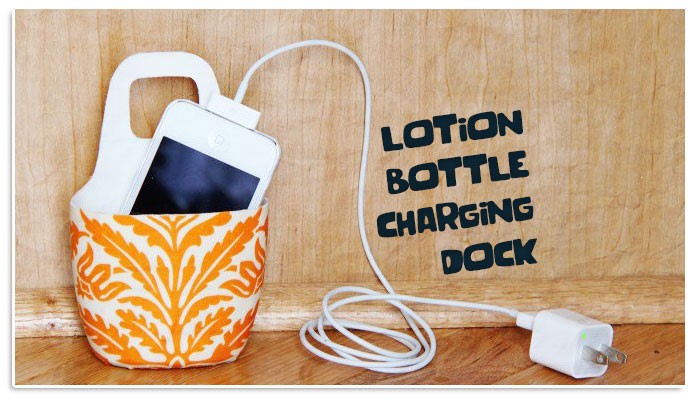
Upcycle a Lotion Bottle into a Charging Dock
It will be a great day when cell phones no longer must be charged. Or at least can get us through a three-hour Instagram scroll session. Until that day, we charge away. Make it easy on yourself and guests by creating a recycled cell phone charging dock. All you need is a lotion bottle, a marker and a box cutter.
Ways will help children recycle plastic bottles
Reuse Honey Bear Bottles by Making a Lamp
Teddy bears shouldn’t be thrown away. That’s more of a fact than an opinion. When you’re finished with a bottle of honey, get ready to recycle and reuse. Learn how to recycle your honey bottle into a honey bear bottel lamp.

Make a Beach Bucket from Laundry Detergent Containers
It’s hard to see a light at the end of the tunnel when a mounting heap of clothes is waiting to be washed. But as your washer powers through load after load and you come to the end of the detergent bottle, remember to stash it away for a rainy day. Like the scooper project above, it can be cut up and made into a beach bucket. So, there’s your light at the end of the tunnel: a recycled plastic beach bucket

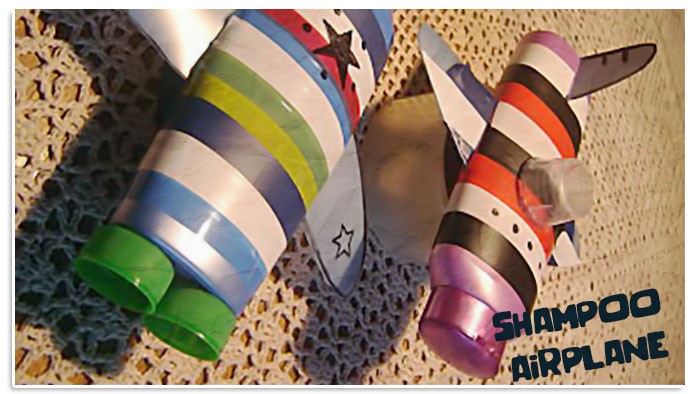
Make Airplane Toys from Shampoo Bottles
You can’t forget about the children. Keep them entertained during bath time with airplane toys made from recycled shampoo bottles. Talk about coming full circle. This project can be completed in a variety of ways, so use your creativity to paint, stick and glue different elements to the outside of the bottle.
What is Plastic Recycling?

Plastic recycling is the process of recovering different types of plastic material in order to reprocess them into varied other products, unlike their original form. An item made out of plastic is recycled into a different product, which usually cannot be recycled again.
Stages in Plastic Recycling
Before any plastic waste is recycled, it needs to go through five different stages so that it can be further used for making various types of products.
- Sorting: It is necessary that every plastic item is separated according to its make and type so that it can be processed accordingly in the shredding machine.
- Washing: Once the sorting has been done, the plastic waste needs to be washed properly to remove impurities such as labels and adhesives. This enhances the quality of the finished product.
- Shredding: After washing, the plastic waste is loaded into different conveyer belts that run the waste through the different shredders. These shredders tear up the plastic into small pellets, preparing them for recycling into other products.
- Identification and Classification of Plastic: After shredding, a proper testing of the plastic pellets is conducted in order to ascertain their quality and class.
- Extruding: This involves melting the shredded plastic so that it can be extruded into pellets, which are then used for making different types of plastic products.
Processes of Plastic Recycling
Among the many processes of recycling plastic waste, the following two are the most popular in the industry.
- Heat Compression: This type of plastic recycling is gaining special demand in the United States, Australia, and Japan because of its ability to recycle all types of plastic at once. It takes unsorted and cleaned plastic waste and mixes it in huge tumblers that churn the entire mixture. The major advantage of this process is that it does not require matching forms of plastic to be recycled together.
- Monomer: Through the elaborate and accurate monomer recycling process, major challenges of plastic recycling can be overcome. This process actually reverses the polymerization reaction in order to recycle the same type of condensed polymer. This process not only purifies but also cleans the plastic waste to create a new polymer.
Benefits of Plastic Recycling
After knowing the processes and stages of plastic recycling, it is also important to know its various benefits. A few of them are:
- There’s A Ton of Plastic: One of the biggest reasons for recycling plastic is its huge quantity. It has been observed that 90% of the waste accumulated by the municipal corporation is a plastic waste. Apart from this, plastic is used for manufacturing various types of goods and items that are being used on a daily basis. This will not only help increase the production of plastic but will also take care of the environment.
- Conservation of Energy and Natural Resources: The recycling of plastic helps save a lot of energy and natural resources as these are the main ingredients required for making virgin plastic. Saving petroleum, water, and other natural resources help conserve the balance in nature.
- Clears Landfill Space: Plastic waste is accumulated on land that should be used for other purposes. The only way this plastic waste can be removed from these areas is by recycling it. Also, various experiments have proven that when another waste material is thrown on the same ground as plastic waste, it decomposes faster and emits hazardous toxic fumes after a certain period. These fumes are extremely harmful to the surrounding area as they can cause different types of lung and skin diseases.
Plastic recycling not only promotes proper utilization of plastic waste but also helps conserve the environment, making it cleaner and greener

The Benefits of Recycling Plastic Bags
Many people feel overwhelmed by the term ‘Recycling’. It is nothing but the process of converting waste or old products into new products. Recycling is one of the most important steps towards the reduction of pollution, and it is fun too, especially when done in groups.
Recycling plastic bags reduces the amount of energy usage, raw materials, pollution, as well as the waste Americans produce. It also provides several other environmental benefits.
Saves Energy
The manufacturing process of plastic bags is a long and complicated one. Therefore, it consumes a significant amount of energy. Recycling plastic bags uses energy as well, since they have to be shredded, cleaned, melted, and remolded, but the energy required is relatively less than what it takes to make fresh plastic bags.
According to a study, recycling 1 ton of plastic bags saves electric energy equivalent to 5,774 kilowatts/hour!
Reduces Oil Consumption
The plastic needed to manufacture plastic bags is made from natural gas or crude oil derivatives. This means that the more plastic bags are manufactured the more nonrenewable fossils fuel will be consumed.
However, recycling plastic bags can cut back on oil consumption significantly. According to a study, recycling 1 ton of plastic bags saves crude oil equivalent to 16.3 barrels.
Reduces Waste
Since plastic bags do not biodegrade, they always exist in landfills and oceans. Nevertheless, recycling used plastic bags significantly decreases the amount of waste that goes to landfills. This helps to reduce land and water pollution as landfills play a major role in the destruction of our environment.
Encourages Sustainable Use
The recycling of plastic bags promotes their careful and sustainable use. Today, recycling plastic bags is easier than ever, as up to 80% Americans have access to recycling programs. Nevertheless, although plastic bag recycling facilities are available, the amount recycled is still relatively low and needs significant improvement.
What Plastics Can Become
One of the things all of us can do to protect and improve our environment is: recycling. Today a plastic bottle may contain juice or water or soda … but what can it become after you use it?
Let’s take a look at some of the everyday plastics that you use and what they can become.

Milk Jugs & Other Plastic Containers
Bottles and containers used for milk, shampoo, laundry detergent and household cleaners are lightweight and tough – but they usually are made from a different type of plastic than beverage bottles.
What can they become? When they are recycled they can make new bottles and containers, plastic lumber, picnic tables, lawn furniture, playground equipment, recycling bins and more.

Plastic Bags and Wraps
We use plastic bags to carry home groceries. They keep our bread and other food fresh. They even let us carry goldfish home from the pet store.
Today there are thousands of grocery and retail stores to collect these bags for recycling, including most Target, Walmart, Lowes, Safeway stores and more. And remember that at all these places, we also can recycle lots of the plastic wraps that protect the things we buy (even bubble wrap!).
What can they become? When they are recycled plastic bags and wraps can made into plastic lumber that is used to make park benches, backyard decks and fences – even playground equipment. They also can be recycled into new plastic bags – and then recycled again. Check out this web site that talks about recycling plastic bags and find out where you can recycle them in your community.
 thecapablerecycle.home.blog