How to Recycle Carton?
Corrugated Carton is the highest value grade of paper, as its durability means long paper fibers. This also helps explain why it has the highest recycling rate of paper products: 92.9 percent in 2015.
Carton Recycling Preparation
Since most Carton is used for shipping, you’ll want to remove any shipping materials such as packing peanuts, plastic bags and bubble wrap. Check out our recycling guides for these materials to learn how to recycle them.
- Use a knife or scissors to cut any tape used to seal the top and/or bottom of the box, then collapse the box. You don’t need to remove the tape, but most recyclers prefer that boxes are flattened to save space.
- For boxes that contained huge items, you may need to fold or cut the flattened box in half for it to fit in your recycling cart. Some programs also allow you to set large boxes next to the cart, but don’t put them out if it’s raining. Wet Carton doesn’t have a recycling market.
- For boxes that are food-soiled (such as pizza boxes), cut out any oil stains before recycling. Food-soiled paper doesn’t have a recycling market.
Why Recycle Carton?
- Over half of the Carton collected is used to make new Carton boxes, and additional Carton can be downcycled into paperboard (used for cereal boxes) or chipboard (used for shoeboxes)
- Making 1 ton of virgin Carton requires 3 tons of trees
- Recycling 1 ton of Carton eliminates 9 cubic yards of landfill space
Things You Can Make With A Carton.
1. A maze to end all mazes.

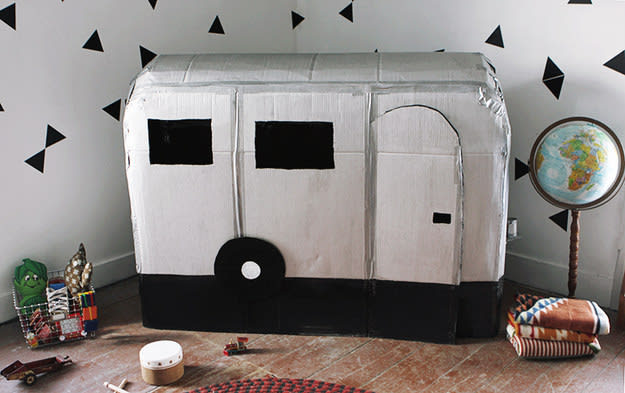
2. camper playhouse.
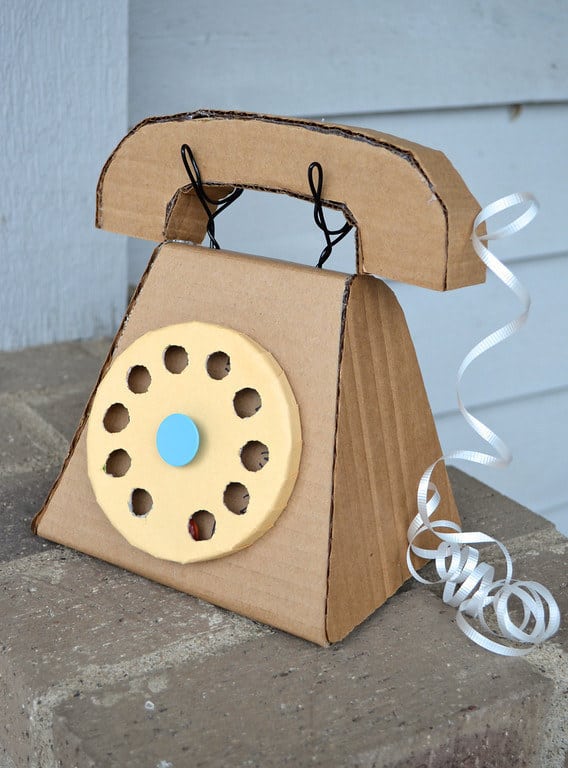
3. This phone that doesn’t even text.
4. A town for Lego toys to populate.

5. A surprisingly chic handbag

6. Your cat’s dream home.

7. Guitars

8. Trains

9. A coffee shop.

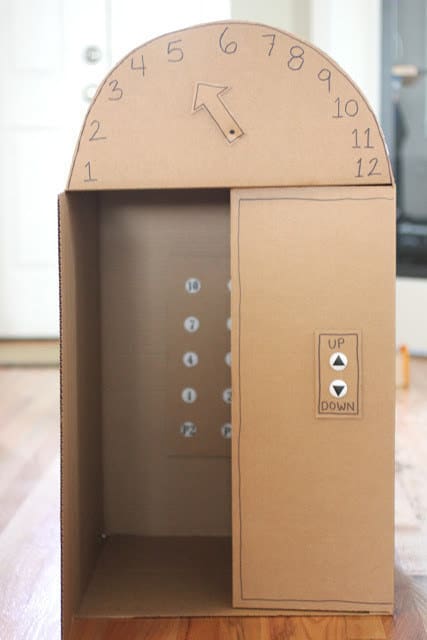
10. An elevator.
How are drinks cartons recycled?
- Drinks cartons are sorted automatically or by hand in the sorting center.
- Just like waste paper, the drink cartons are submerged in water. This way, the paper fibers become unstuck from the plastic and aluminum layers.
- Unstuck cardboard fibers are then further recycled in the same way as ordinary paper-cardboard. The plastic can be recycled or used as a source of energy for cement ovens, whereas aluminum is either recycled, either utilized elsewhere.
How are cartons collected for recycling?

Cartons are recovered under different systems across the country, including via residential collection programs – some of which are entirely or partially funded through stewardship fees, others funded entirely via the municipal tax base – and through beverage container deposit systems. In some provinces, both types of systems co-exist. The content of the carton (juice, milk, or non-beverage) sometimes determines the system by which they are collected. Refer to the Get Involved Section for information on how cartons are collected where you live.
How are cartons recycled?
The recycling process for cartons is simple. Once collected, they are sorted from other materials at a Materials Recovery Facility (MRF). From there, they are sent to a paper mill.
Fiber in the cartons is separated from the non-fibre materials (polyethylene and aluminum) and converted into pulp in a hydropulper (similar to a giant kitchen blender), which in turn is made into useful products. Non-fiber materials can be marketed elsewhere.
Cartons can also be recycled in their entirety using other technologies, such as extrusion and thermo-compression. This is a one-step process in which the entire carton is used to make products such as ceiling tiles and wall board. [1]
 thecapablerecycle.home.blog